STORY
ABOUT THE Strelitzia reginae
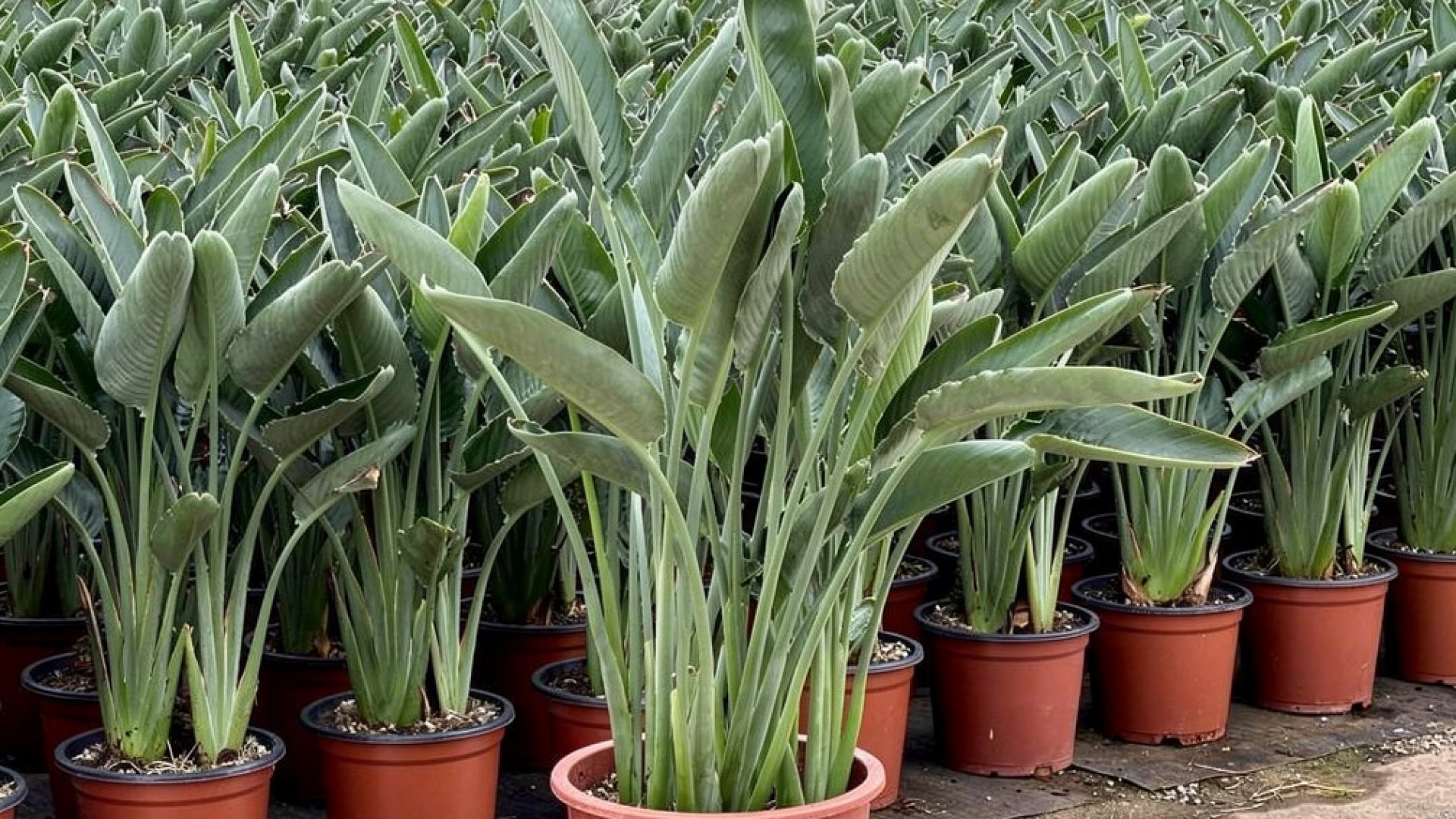
With its bold, tropical-looking flowers in vivid orange and electric blue, Strelitzia reginae brings an exotic statement to Mediterranean and coastal garden projects. Originally from South Africa, it thrives in warm, sunny climates and has become a signature plant in high-end landscape design throughout the Mediterranean region. Its dramatic visual impact and long-lasting blooms make it a premium offering for discerning professional buyers.
AVAILABLE DIMENSIONS
SELECT YOUR IDEAL SIZE
PLANT DETAILS
EVERYTHING YOU NEED TO KNOW
DETAILS
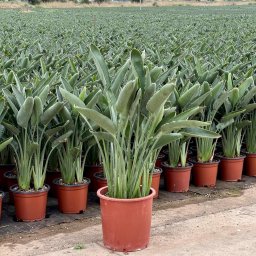
Strelitzia reginae, commonly known as Bird of Paradise, belongs to the family Strelitziaceae. It forms a clump-forming, evergreen perennial with rigid, paddle-shaped grey-green leaves on long petioles, reaching 90 to 150 cm in height and similar spread at maturity. The foliage is leathery and highly ornamental even when not in flower.
The iconic blooms emerge from a horizontal green spathe tinged with red or purple, producing vivid orange sepals and electric blue petals in a structure that resembles a tropical bird in flight. Plants bloom primarily in late winter through spring, with sporadic flowering year-round in warm climates. Flowers are long-lasting, making them prized for both landscape use and cut flower production.
The iconic blooms emerge from a horizontal green spathe tinged with red or purple, producing vivid orange sepals and electric blue petals in a structure that resembles a tropical bird in flight. Plants bloom primarily in late winter through spring, with sporadic flowering year-round in warm climates. Flowers are long-lasting, making them prized for both landscape use and cut flower production.
GROWING
Strelitzia reginae thrives in full sun to light partial shade and performs best in well-drained, fertile loamy or sandy soils with a pH between 5.5 and 7.5. It is moderately drought tolerant once established but benefits from regular watering during active growth and flowering periods. Overwatering and poorly drained soils should be strictly avoided to prevent root rot.
Growth rate is moderate, and plants typically begin flowering after three to five years from division or seven or more years from seed. For professional buyers sourcing wholesale Strelitzia reginae from a nursery, pre-grown specimens in 5 to 10 litre containers offer reliable establishment and earlier flowering in landscape projects.
Growth rate is moderate, and plants typically begin flowering after three to five years from division or seven or more years from seed. For professional buyers sourcing wholesale Strelitzia reginae from a nursery, pre-grown specimens in 5 to 10 litre containers offer reliable establishment and earlier flowering in landscape projects.
CLIMATE
Strelitzia reginae is ideally suited to USDA hardiness zones 10 to 12, tolerating light frost down to approximately minus 2 degrees Celsius for short periods. It thrives across Mediterranean, subtropical, and warm coastal climates, making it a staple species in high-end landscape projects across southern Spain, Portugal, Italy, and the broader Mediterranean basin.
It demonstrates good heat tolerance and moderate drought resilience, performing reliably in exposed coastal gardens where salt-laden winds are a concern. In borderline frost zones, planting in sheltered microclimates such as south-facing walls or urban heat pockets significantly extends viability. Professional landscapers buying wholesale Bird of Paradise for Mediterranean projects will find it highly adaptable to local conditions.
It demonstrates good heat tolerance and moderate drought resilience, performing reliably in exposed coastal gardens where salt-laden winds are a concern. In borderline frost zones, planting in sheltered microclimates such as south-facing walls or urban heat pockets significantly extends viability. Professional landscapers buying wholesale Bird of Paradise for Mediterranean projects will find it highly adaptable to local conditions.
LANDSCAPING
Strelitzia reginae is a premium choice for resort landscaping, luxury residential gardens, and public urban planting schemes where bold tropical character is required. It works beautifully as a specimen plant, in grouped mass plantings, or as a structural border element. Recommended spacing is 80 to 120 cm apart for dense groupings. Effective companion plants include Agapanthus, Phormium, Lavandula, and ornamental grasses.
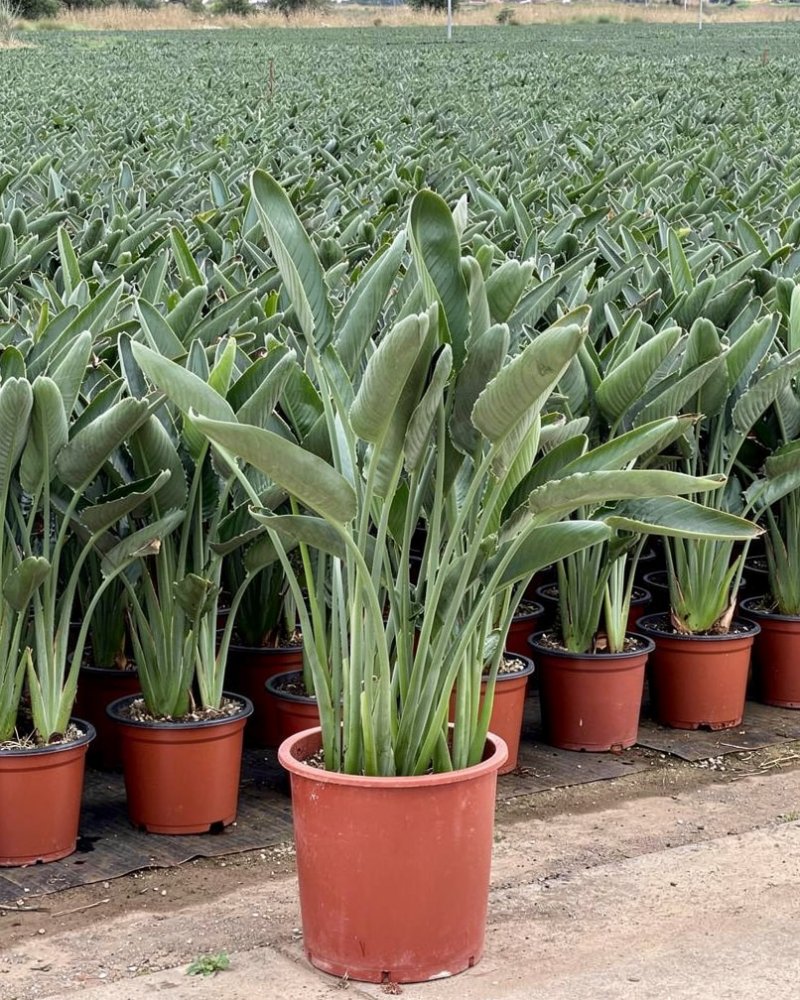
For wholesale buyers and landscape contractors, Strelitzia reginae is typically supplied in 3 to 10 litre containers, with larger specimens available in 20 to 45 litre formats. Plants are robust during transport when correctly staked and protected from wind damage. Orders for buy wholesale Bird of Paradise Spain should account for careful handling to protect flower stems and leaf petioles during logistics.
For wholesale buyers and landscape contractors, Strelitzia reginae is typically supplied in 3 to 10 litre containers, with larger specimens available in 20 to 45 litre formats. Plants are robust during transport when correctly staked and protected from wind damage. Orders for buy wholesale Bird of Paradise Spain should account for careful handling to protect flower stems and leaf petioles during logistics.
CARE
Strelitzia reginae requires minimal pruning. Remove spent flower stalks at the base and cut back damaged or yellowing leaves to maintain a tidy appearance. Fertilise with a balanced slow-release fertiliser in early spring and supplement with a potassium-rich feed in late summer to encourage flowering. Avoid excessive nitrogen, which promotes foliage at the expense of blooms.
This species shows good resistance to most pests and diseases under correct growing conditions. Scale insects and mealybugs may occasionally occur and should be managed with horticultural oils. In cooler zones, apply a protective mulch around the root zone during winter. Long-term maintenance is low, making it a highly cost-effective premium plant for professional landscape applications.
This species shows good resistance to most pests and diseases under correct growing conditions. Scale insects and mealybugs may occasionally occur and should be managed with horticultural oils. In cooler zones, apply a protective mulch around the root zone during winter. Long-term maintenance is low, making it a highly cost-effective premium plant for professional landscape applications.