STORY
ABOUT THE Rosmarinus officinalis
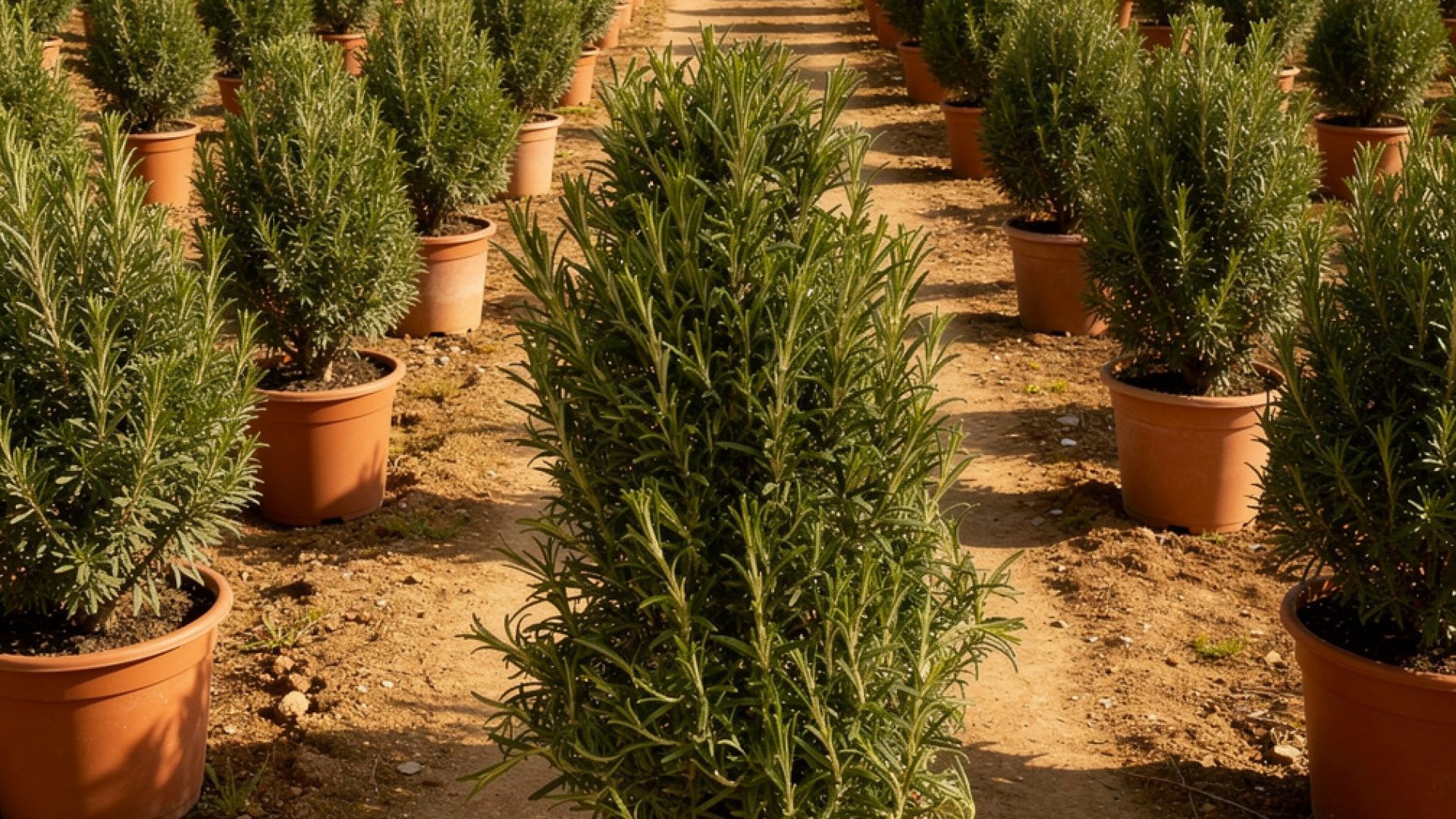
Rosemary is a hardy, aromatic shrub deeply rooted in Mediterranean culture and horticulture, known for its needle-like foliage and delicate blue flowers. It adapts well to poor, dry soils and coastal conditions, making it a practical and attractive choice for large-scale planting schemes. Landscapers appreciate its dual role as both an ornamental plant and a culinary herb, broadening its commercial appeal.
AVAILABLE DIMENSIONS
SELECT YOUR IDEAL SIZE


PLANT DETAILS
EVERYTHING YOU NEED TO KNOW
DETAILS
Rosmarinus officinalis belongs to the Lamiaceae family and is an evergreen aromatic shrub with a dense, upright to spreading habit depending on cultivar. Its needle-like, leathery leaves are dark green on the upper surface and silver-white beneath, releasing a distinctive resinous fragrance when touched. Small tubular flowers ranging from pale blue to violet appear from late winter through spring, occasionally reblooming in autumn.
Mature specimens typically reach 1 to 1.5 metres in height and spread, though prostrate forms stay below 50 cm. The woody branching structure and fine-textured foliage give Rosmarinus officinalis strong year-round ornamental value, making it a reliable structural plant for commercial landscaping projects.
Mature specimens typically reach 1 to 1.5 metres in height and spread, though prostrate forms stay below 50 cm. The woody branching structure and fine-textured foliage give Rosmarinus officinalis strong year-round ornamental value, making it a reliable structural plant for commercial landscaping projects.
GROWING
Rosemary thrives in full sun with a minimum of six to eight hours of direct light daily. It performs best in well-drained, sandy or loamy soils with a slightly alkaline to neutral pH between 6.0 and 8.0. It is highly drought-tolerant once established and sensitive to waterlogged conditions, which can cause root rot. Avoid heavy clay soils without amendment.
Growth rate is moderate, typically 20 to 30 cm per year under optimal conditions. Plants sourced from a wholesale Rosmarinus officinalis nursery in Spain or southern Europe are generally pre-adapted to lean soils and warm climates, reducing establishment time on site.
Growth rate is moderate, typically 20 to 30 cm per year under optimal conditions. Plants sourced from a wholesale Rosmarinus officinalis nursery in Spain or southern Europe are generally pre-adapted to lean soils and warm climates, reducing establishment time on site.
CLIMATE
Rosmarinus officinalis is rated for USDA hardiness zones 7 to 11, tolerating minimum temperatures of around minus 10 degrees Celsius for short periods. It excels in hot, dry Mediterranean climates and is well suited to coastal environments, showing good salt spray tolerance. In zones 6 and below, it benefits from a sheltered microclimate and winter mulching.
Heat tolerance is excellent, making it ideal for urban heat island planting schemes and south-facing slopes. Buyers looking to buy wholesale Rosemary Spain will find material naturally acclimated to drought and coastal wind stress, reducing transplant shock and improving establishment rates in challenging conditions.
Heat tolerance is excellent, making it ideal for urban heat island planting schemes and south-facing slopes. Buyers looking to buy wholesale Rosemary Spain will find material naturally acclimated to drought and coastal wind stress, reducing transplant shock and improving establishment rates in challenging conditions.
LANDSCAPING
Rosemary is highly versatile in landscape design, used for low hedging, mass planting, slope stabilisation, sensory gardens, and Mediterranean-themed schemes. It pairs well with Lavandula, Cistus, Salvia, and ornamental grasses. For hedging, space plants 50 to 70 cm apart; for ground cover with prostrate cultivars, allow 80 to 100 cm centres.
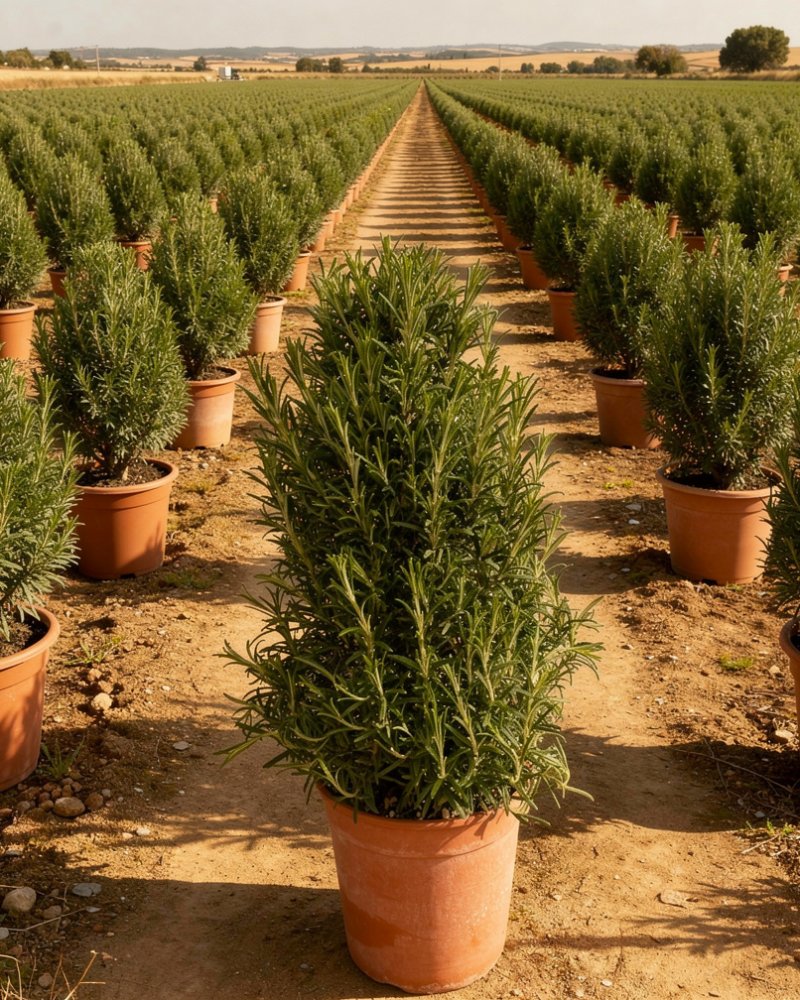
For wholesale buyers, Rosmarinus officinalis is typically supplied in C2 to C5 containers, keeping individual pot weights manageable for manual handling. Plants ship efficiently on standard pallets from Mediterranean nurseries with low moisture requirements during transit, reducing freight costs. Order lead times and minimum quantities should be confirmed directly with the wholesale nursery supplier.
For wholesale buyers, Rosmarinus officinalis is typically supplied in C2 to C5 containers, keeping individual pot weights manageable for manual handling. Plants ship efficiently on standard pallets from Mediterranean nurseries with low moisture requirements during transit, reducing freight costs. Order lead times and minimum quantities should be confirmed directly with the wholesale nursery supplier.
CARE
Prune Rosemary lightly after each flowering period to maintain shape and encourage bushy growth. Avoid cutting back into old wood, as regeneration from bare stems is unreliable. No heavy fertilization is needed; an annual application of a balanced slow-release fertilizer in early spring is sufficient. Overfeeding reduces aromatic oil concentration and can weaken structure.
Rosemary has strong natural resistance to most pests and diseases when grown in well-ventilated, sunny positions. Powdery mildew and spittlebug can occur in humid conditions. Long-term maintenance is minimal, making it a cost-effective choice for large-scale installations. Regular light trimming over years preserves density and prevents the plant from becoming woody and open at the base.
Rosemary has strong natural resistance to most pests and diseases when grown in well-ventilated, sunny positions. Powdery mildew and spittlebug can occur in humid conditions. Long-term maintenance is minimal, making it a cost-effective choice for large-scale installations. Regular light trimming over years preserves density and prevents the plant from becoming woody and open at the base.