STORY
ABOUT THE Olea europaea
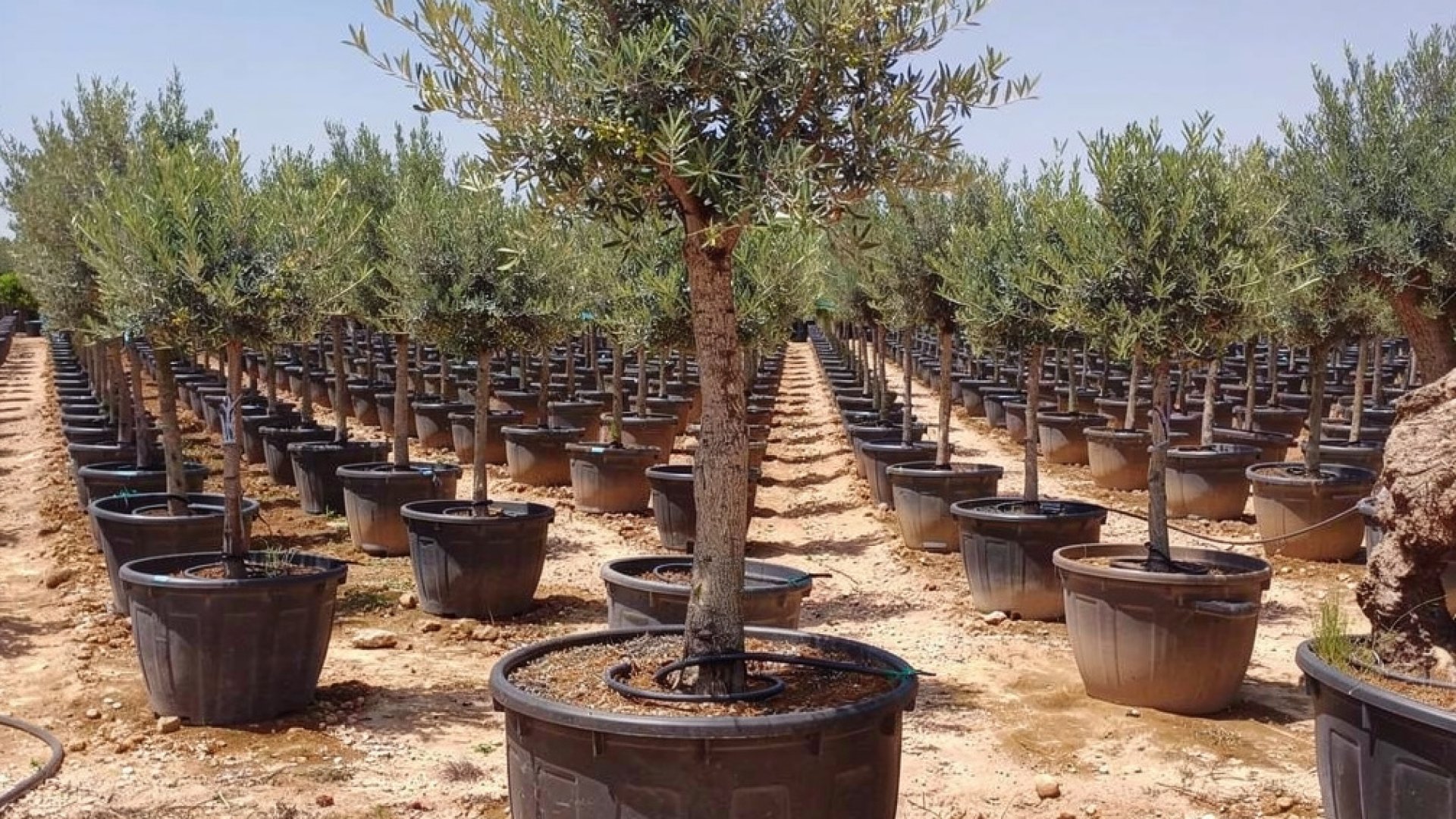
One of the most iconic trees of the Mediterranean basin, the olive tree offers striking silver-green foliage and a gnarled, sculptural trunk that adds instant character to any landscape. Highly drought-tolerant and long-lived, it is a top choice for premium outdoor projects along coastal and inland settings. Its timeless appeal makes it a consistent bestseller for professional landscapers and developers alike.
AVAILABLE DIMENSIONS
SELECT YOUR IDEAL SIZE
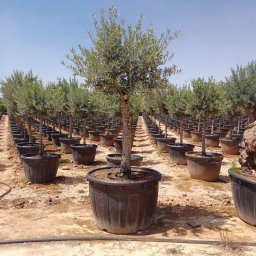
300 L
/
95 CM CIRC.
AVAILABLE NOW
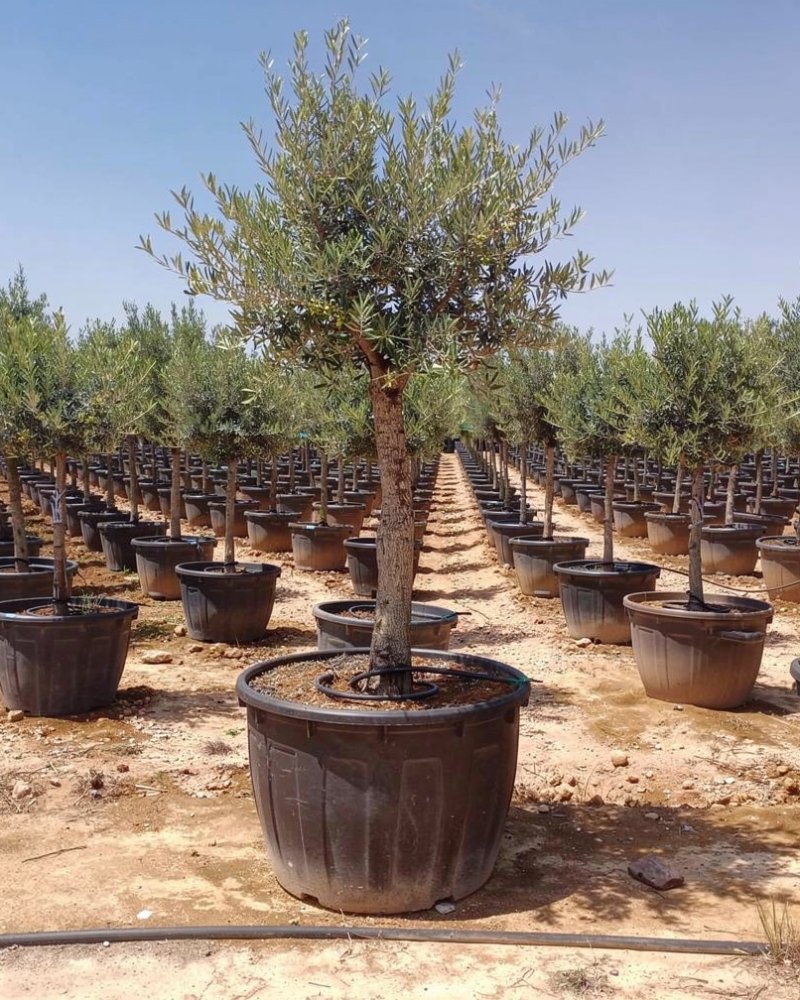
Trunk: 220cm
Height: 480cm
Pot: 110cm ⌀
PLANT DETAILS
EVERYTHING YOU NEED TO KNOW
DETAILS
Olea europaea belongs to the family Oleaceae and is a slow-growing, evergreen tree with a characteristically gnarled, sculptural trunk that develops remarkable form over centuries. Its narrow, lance-shaped leaves display a distinctive silver-green upper surface and pale grey-green underside, creating a shimmering effect in the breeze. Mature specimens typically reach 8 to 15 metres in height with an equally broad canopy spread.
Small, creamy-white fragrant flowers appear in panicles during late spring, followed by drupes that ripen from green to black between autumn and winter. The species is celebrated for its extraordinary longevity, with documented specimens exceeding 1,000 years. These qualities make wholesale Olea europaea a premium choice for high-value landscape projects.
Small, creamy-white fragrant flowers appear in panicles during late spring, followed by drupes that ripen from green to black between autumn and winter. The species is celebrated for its extraordinary longevity, with documented specimens exceeding 1,000 years. These qualities make wholesale Olea europaea a premium choice for high-value landscape projects.
GROWING
Olea europaea thrives in well-drained, loamy to sandy soils with a preferred pH range of 5.5 to 8.5, demonstrating excellent tolerance for poor, rocky, and calcareous substrates. Full sun exposure of at least 6 to 8 hours daily is essential for optimal growth, vigour, and fruiting. Established trees require minimal irrigation, making them highly cost-effective for low-maintenance landscape contracts.
Growth rate is slow to moderate, typically 20 to 30 cm per year under favourable conditions. Buyers sourcing wholesale olive trees from Spain or Italy will find nursery-grown stock in large containers that ensures reliable establishment across diverse soil environments.
Growth rate is slow to moderate, typically 20 to 30 cm per year under favourable conditions. Buyers sourcing wholesale olive trees from Spain or Italy will find nursery-grown stock in large containers that ensures reliable establishment across diverse soil environments.
CLIMATE
Olea europaea is rated for USDA Hardiness Zones 8 to 11, tolerating minimum temperatures down to approximately minus 10 degrees Celsius when fully established and properly hardened. It excels in hot, dry Mediterranean climates and performs well in coastal settings due to strong salt spray and wind tolerance. Inland plantings in semi-arid regions also produce excellent results.
In marginal zones, siting trees against south-facing walls or within sheltered urban microclimates significantly improves cold hardiness. Heat tolerance is exceptional, with trees performing reliably across the full spectrum of Mediterranean, subtropical, and warm temperate regions targeted by professional landscapers and resort developers.
In marginal zones, siting trees against south-facing walls or within sheltered urban microclimates significantly improves cold hardiness. Heat tolerance is exceptional, with trees performing reliably across the full spectrum of Mediterranean, subtropical, and warm temperate regions targeted by professional landscapers and resort developers.
LANDSCAPING
Wholesale Olea europaea specimens are widely used as specimen trees, avenue plantings, courtyard focal points, and structural anchors in luxury residential, hospitality, and commercial landscape projects. They pair beautifully with Lavandula, Rosmarinus, Cistus, Agave, and ornamental grasses in Mediterranean-style schemes. Recommended spacing for avenue planting is 5 to 8 metres centre to centre.
For wholesale buyers, large olive trees are typically supplied in 100 to 500 litre containers, with pot weights ranging from 80 to over 600 kg for aged specimens. Specialist crane-equipped transport is recommended for trees above 200 litres. Early coordination with your wholesale nursery on lead times and logistics ensures timely project delivery.
For wholesale buyers, large olive trees are typically supplied in 100 to 500 litre containers, with pot weights ranging from 80 to over 600 kg for aged specimens. Specialist crane-equipped transport is recommended for trees above 200 litres. Early coordination with your wholesale nursery on lead times and logistics ensures timely project delivery.
CARE
Pruning should be carried out in late spring after any frost risk has passed, focusing on maintaining an open canopy for air circulation and removing crossing or dead wood. Light annual pruning encourages vigour without disrupting the tree's natural sculptural form, which is a key selling point for premium landscape projects. Avoid heavy winter pruning in colder climates.
Apply a balanced slow-release fertiliser in early spring, supplemented with a potassium-rich feed in late summer to support wood hardening. Olea europaea shows strong resistance to most pests, though Verticillium wilt and olive knot (Pseudomonas savastanoi) warrant monitoring. Container specimens require annual root-zone inspection and periodic repotting to sustain long-term health.
Apply a balanced slow-release fertiliser in early spring, supplemented with a potassium-rich feed in late summer to support wood hardening. Olea europaea shows strong resistance to most pests, though Verticillium wilt and olive knot (Pseudomonas savastanoi) warrant monitoring. Container specimens require annual root-zone inspection and periodic repotting to sustain long-term health.