STORY
ABOUT THE Chamaerops humilis
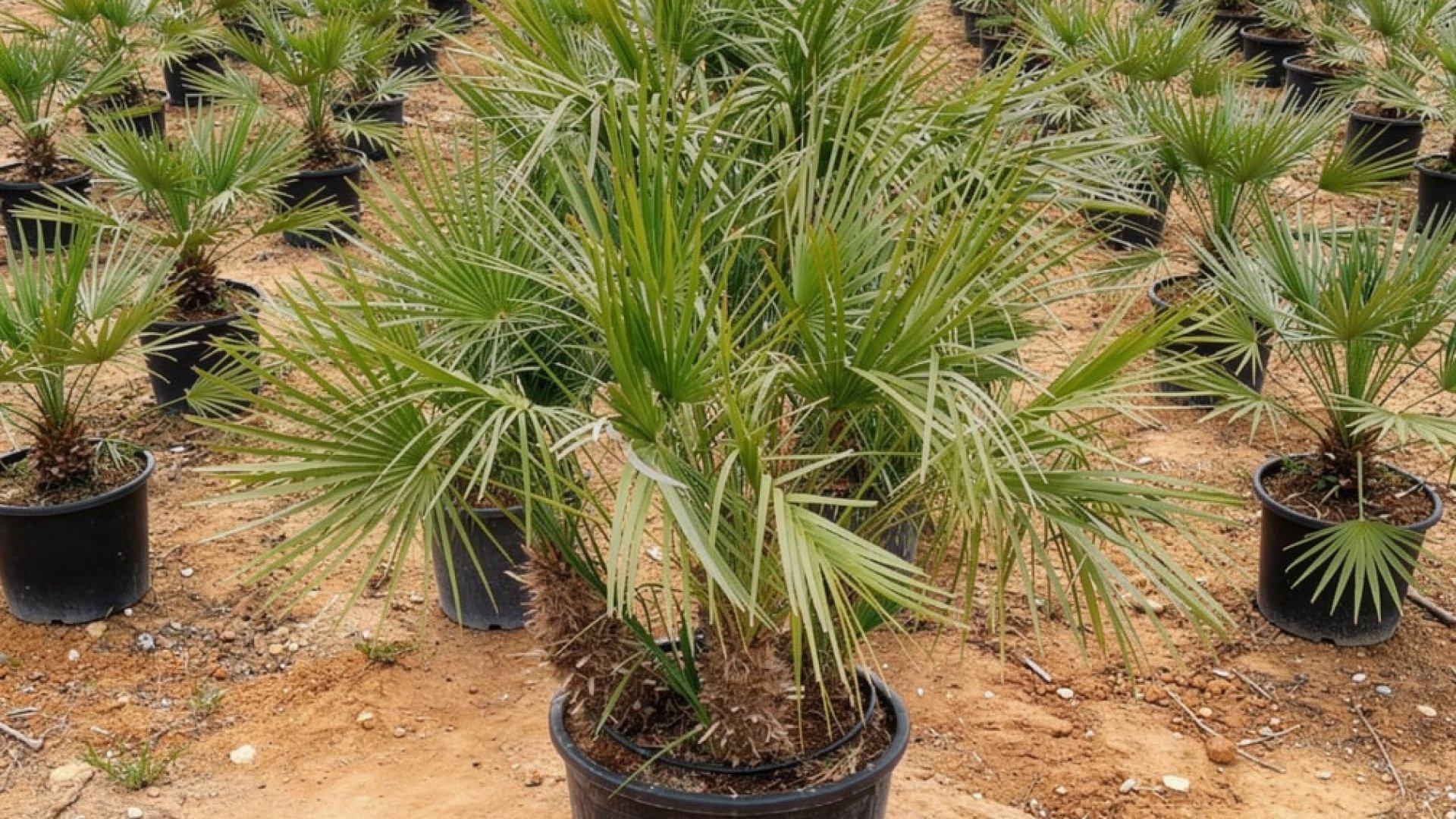
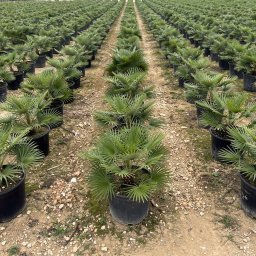
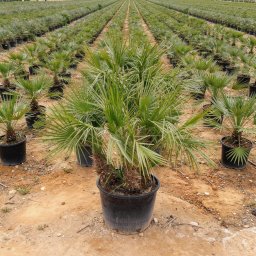
The only palm native to continental Europe, Chamaerops humilis is a multi-stemmed, architectural species that thrives in coastal and arid Mediterranean environments. Its compact growth habit and tolerance for salt spray make it an outstanding choice for seafront developments and resort landscaping. Professional buyers value it for its versatility, durability, and unmistakable Mediterranean character.
AVAILABLE DIMENSIONS
SELECT YOUR IDEAL SIZE
PLANT DETAILS
EVERYTHING YOU NEED TO KNOW
DETAILS
Chamaerops humilis, the European Fan Palm, belongs to the family Arecaceae and stands as the only palm species native to continental Europe. It forms a multi-stemmed, clumping habit with rigid, palmate fronds of blue-green to grey-green coloration, each armed with sharp petiole spines. Mature specimens reach 2 to 5 metres in height, occasionally more under optimal conditions, with an equally broad spread that reinforces its architectural presence.
Small yellow flowers emerge in dense panicles from spring onward, followed by orange to brown date-like fruits. The fibrous trunk bases, known as crin vegetale, add textural interest year-round. Its slow, sculptural development and unmistakable silhouette make it a premium choice for buyers sourcing wholesale Chamaerops humilis for high-end Mediterranean landscaping projects.
Small yellow flowers emerge in dense panicles from spring onward, followed by orange to brown date-like fruits. The fibrous trunk bases, known as crin vegetale, add textural interest year-round. Its slow, sculptural development and unmistakable silhouette make it a premium choice for buyers sourcing wholesale Chamaerops humilis for high-end Mediterranean landscaping projects.
GROWING
Chamaerops humilis thrives in free-draining, sandy or loamy soils with a pH range of 6.0 to 8.0, tolerating poor and rocky substrates that challenge most ornamental species. Full sun exposure is essential for compact, vigorous growth. It establishes well with minimal irrigation once rooted, making it highly suitable for water-conscious planting schemes.
Growth rate is slow to moderate, typically 15 to 30 cm per year under nursery conditions. Plants grown in containers require well-aerated substrate to prevent root saturation. Professional buyers purchasing wholesale European Fan Palm stock from a Mediterranean nursery in Spain benefit from plants already acclimated to warm, dry production environments.
Growth rate is slow to moderate, typically 15 to 30 cm per year under nursery conditions. Plants grown in containers require well-aerated substrate to prevent root saturation. Professional buyers purchasing wholesale European Fan Palm stock from a Mediterranean nursery in Spain benefit from plants already acclimated to warm, dry production environments.
CLIMATE
Chamaerops humilis is rated for USDA hardiness zones 8 to 11, tolerating temperatures down to approximately minus 10 degrees Celsius when established and dry. Its natural range across the western Mediterranean confirms strong heat tolerance and adaptability to prolonged drought periods during summer months.
Coastal resilience is a standout characteristic, with mature specimens tolerating salt spray and strong sea winds without significant foliar damage. In marginally cold climates, positioning plants against south-facing walls or in sheltered urban microclimates extends viability considerably. Its broad climatic adaptability makes it a reliable long-term investment for landscapers and resort developers across southern Europe, North Africa, and comparable regions worldwide.
Coastal resilience is a standout characteristic, with mature specimens tolerating salt spray and strong sea winds without significant foliar damage. In marginally cold climates, positioning plants against south-facing walls or in sheltered urban microclimates extends viability considerably. Its broad climatic adaptability makes it a reliable long-term investment for landscapers and resort developers across southern Europe, North Africa, and comparable regions worldwide.
LANDSCAPING
Chamaerops humilis is widely used in coastal resort landscaping, urban streetscaping, dry Mediterranean gardens, and container displays for hotel terraces and public spaces. Its clumping habit suits mass planting for screening or specimen use as a focal point. Effective companion plants include Agave, Lavandula, Cistus, and Stipa grasses to reinforce a cohesive Mediterranean planting palette. Recommended spacing for mass planting is 2 to 3 metres centre to centre.
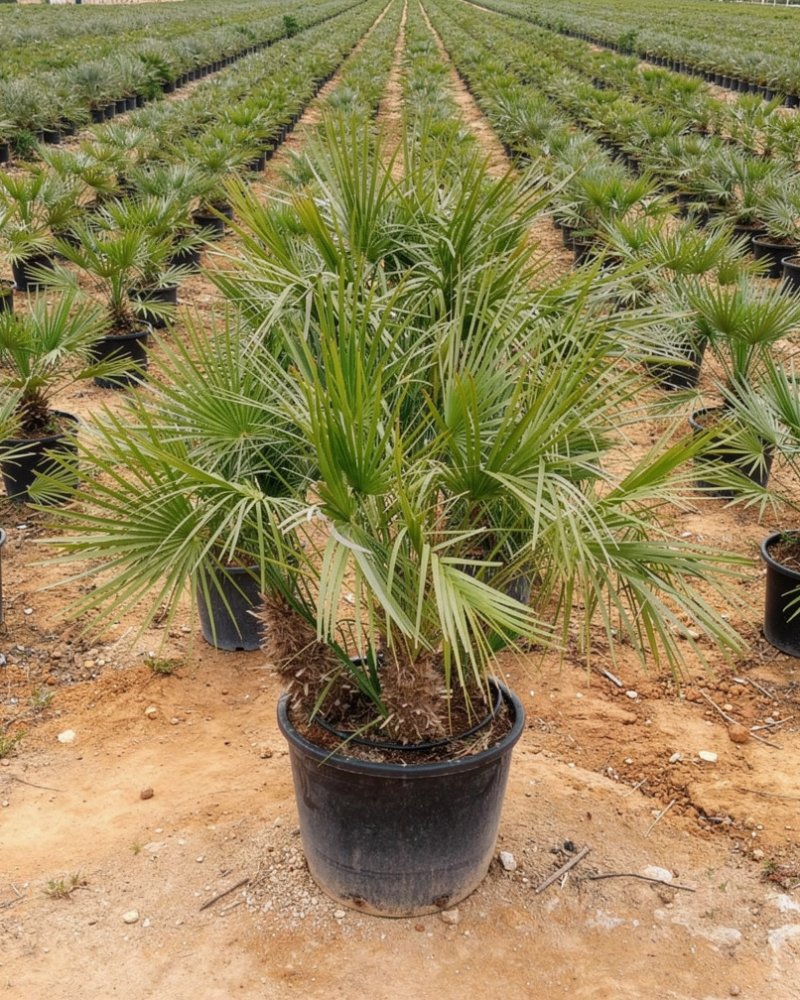
For wholesale buyers, Chamaerops humilis is typically available in 5-litre to 500-litre containers. Larger specimens are heavy and require forklift handling and flatbed transport. Buyers sourcing wholesale European Fan Palm from a Spanish nursery should plan logistics carefully, as pot weights for specimen sizes can exceed 200 kg.
For wholesale buyers, Chamaerops humilis is typically available in 5-litre to 500-litre containers. Larger specimens are heavy and require forklift handling and flatbed transport. Buyers sourcing wholesale European Fan Palm from a Spanish nursery should plan logistics carefully, as pot weights for specimen sizes can exceed 200 kg.
CARE
Established specimens require minimal pruning. Remove only fully dead fronds close to the trunk to maintain a tidy appearance, and avoid cutting green or transitioning fronds, which remain photosynthetically active. Fertilise with a slow-release balanced palm fertiliser in spring and again in early summer to support healthy frond production and deep green coloration.
Chamaerops humilis shows strong natural resistance to most pests and diseases. The primary threat in cultivation is Rhynchophorus ferrugineus, the red palm weevil, which requires preventive insecticide treatment in affected regions. In colder zones, wrapping the crown with horticultural fleece during winter protects the growing point during frost events, ensuring long-term plant health and commercial value for end clients.
Chamaerops humilis shows strong natural resistance to most pests and diseases. The primary threat in cultivation is Rhynchophorus ferrugineus, the red palm weevil, which requires preventive insecticide treatment in affected regions. In colder zones, wrapping the crown with horticultural fleece during winter protects the growing point during frost events, ensuring long-term plant health and commercial value for end clients.