STORY
ABOUT THE Ceratonia siliqua
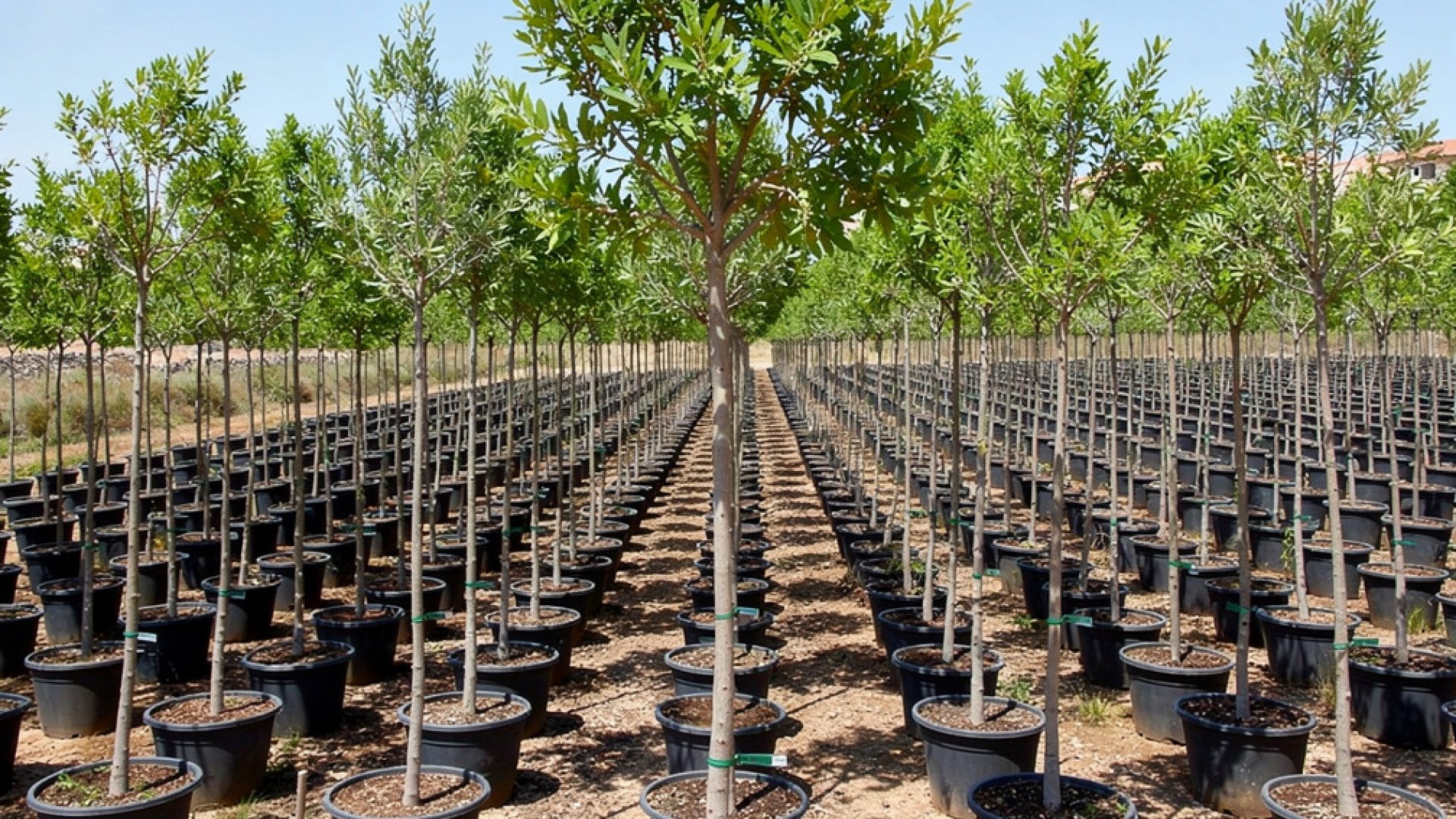
Native to the eastern Mediterranean, the carob tree is a robust and evergreen species prized for its dense, dark canopy and exceptional drought resistance. It thrives in poor, rocky soils and coastal climates, making it ideal for large-scale landscaping projects where low maintenance is essential. Its edible pods and historical significance add unique value for buyers seeking both function and story in their plantings.
AVAILABLE DIMENSIONS
SELECT YOUR IDEAL SIZE
PLANT DETAILS
EVERYTHING YOU NEED TO KNOW
DETAILS
Ceratonia siliqua, commonly known as the Carob Tree, belongs to the family Fabaceae, subfamily Caesalpinioideae. It is a slow-growing, evergreen tree with a broad, rounded crown, reaching 10 to 15 metres at maturity. The pinnate, leathery leaves are deep glossy green, providing year-round dense canopy coverage. Small red flowers emerge directly on branches and trunk in autumn, a trait known as cauliflory.
The tree produces distinctive flattened, dark brown pods up to 20 cm long, ripening in late summer to autumn. These pods carry both commercial and ornamental value. The deeply furrowed bark and sculptural branching structure give mature specimens strong architectural presence, making wholesale Ceratonia siliqua a distinctive choice for landmark planting schemes.
The tree produces distinctive flattened, dark brown pods up to 20 cm long, ripening in late summer to autumn. These pods carry both commercial and ornamental value. The deeply furrowed bark and sculptural branching structure give mature specimens strong architectural presence, making wholesale Ceratonia siliqua a distinctive choice for landmark planting schemes.
GROWING
Ceratonia siliqua thrives in well-drained, sandy, or rocky soils with a pH range of 6.0 to 8.5, tolerating poor, calcareous substrates where most trees struggle. It requires full sun exposure for optimal growth and canopy density. Once established, it demands minimal irrigation, making it highly suited to water-restricted landscaping projects across Mediterranean and semi-arid regions.
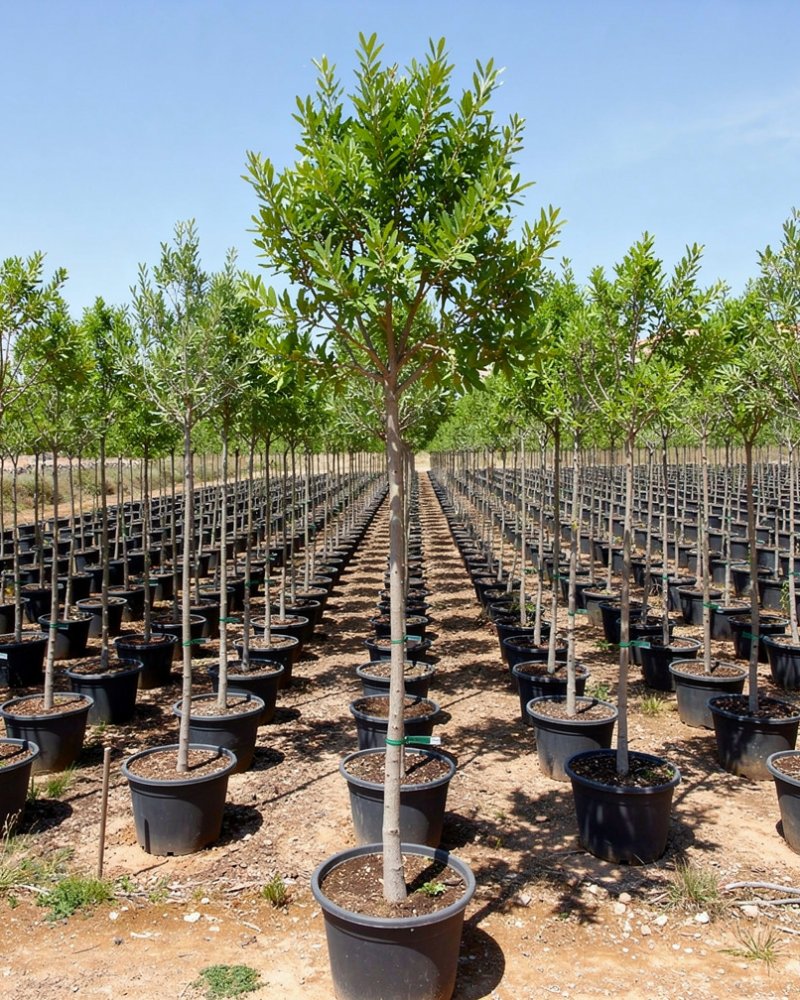
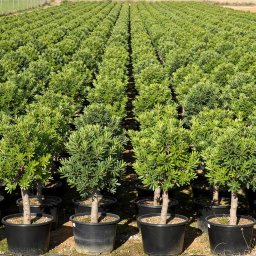
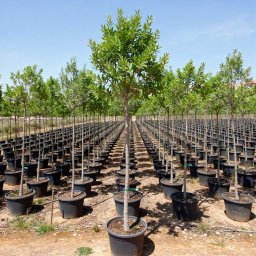
Growth rate is slow to moderate, typically 30 to 60 cm per year under good conditions. For wholesale buyers sourcing from a Mediterranean nursery, specimens are typically supplied in 45 to 200 litre containers, ensuring root establishment and reducing transplant stress on larger, semi-mature trees.
Growth rate is slow to moderate, typically 30 to 60 cm per year under good conditions. For wholesale buyers sourcing from a Mediterranean nursery, specimens are typically supplied in 45 to 200 litre containers, ensuring root establishment and reducing transplant stress on larger, semi-mature trees.
CLIMATE
Ceratonia siliqua is rated for USDA hardiness zones 9 to 11, tolerating light frosts down to approximately minus 7 degrees Celsius once well established. It excels in hot, dry summers typical of Mediterranean, subtropical, and coastal climates, demonstrating outstanding heat and drought tolerance. Young plants require frost protection during their first two winters.
The species shows excellent coastal tolerance, withstanding salt-laden winds and saline soils, making it a strong candidate for seaside landscaping projects. It performs best in regions with dry summers and mild winters. Buyers in zones 8b can succeed with careful siting in sheltered, south-facing microclimates with good drainage to prevent cold damage.
The species shows excellent coastal tolerance, withstanding salt-laden winds and saline soils, making it a strong candidate for seaside landscaping projects. It performs best in regions with dry summers and mild winters. Buyers in zones 8b can succeed with careful siting in sheltered, south-facing microclimates with good drainage to prevent cold damage.
LANDSCAPING
The Carob Tree is ideal for large-scale public landscaping, urban streetscapes, coastal promenades, agroforestry projects, and Mediterranean garden designs. Its dense evergreen canopy provides effective shade and wind screening. Recommended planting spacing is 6 to 10 metres for canopy trees, or 4 metres for screening rows. Companion plants include Olea europaea, Pistacia lentiscus, and Lavandula species.
For wholesale buyers purchasing Ceratonia siliqua in bulk, logistics planning is essential. Larger container specimens in 100 to 200 litre pots can exceed 150 kg per unit. Buyers should coordinate with the nursery on crane-assisted loading and reinforced flatbed transport. Buy wholesale Carob Tree Spain from nurseries supplying pre-conditioned, field-hardened stock for best post-installation results.
For wholesale buyers purchasing Ceratonia siliqua in bulk, logistics planning is essential. Larger container specimens in 100 to 200 litre pots can exceed 150 kg per unit. Buyers should coordinate with the nursery on crane-assisted loading and reinforced flatbed transport. Buy wholesale Carob Tree Spain from nurseries supplying pre-conditioned, field-hardened stock for best post-installation results.
CARE
Ceratonia siliqua requires minimal pruning, limited to removing deadwood and shaping during late winter or early spring before new growth. Avoid heavy pruning during frost periods. Fertilization needs are low; an annual slow-release balanced fertilizer in early spring supports healthy growth in container or recently transplanted specimens. Established trees in open ground rarely require supplemental feeding.
The species demonstrates strong resistance to most common pests and diseases. Occasional issues include carob moth (Ectomyelois ceratoniae) affecting pods, and root rot in poorly drained soils. Long-term maintenance is minimal once established, making wholesale Ceratonia siliqua an economically attractive option for low-maintenance large-scale landscaping contracts.
The species demonstrates strong resistance to most common pests and diseases. Occasional issues include carob moth (Ectomyelois ceratoniae) affecting pods, and root rot in poorly drained soils. Long-term maintenance is minimal once established, making wholesale Ceratonia siliqua an economically attractive option for low-maintenance large-scale landscaping contracts.